21

The sole of my trekking boots got separated from the boot body. Since the boots would be otherwise usable - they are more than ten years old but without too much use - repairing them would be an option. In fact, the sole just needs to be glued again to the boot.

My question is whether such a reparation would be reasonably reliable, or if gluing soles to shoes (at a shoe repairer) is only worth for light use urban shoes?
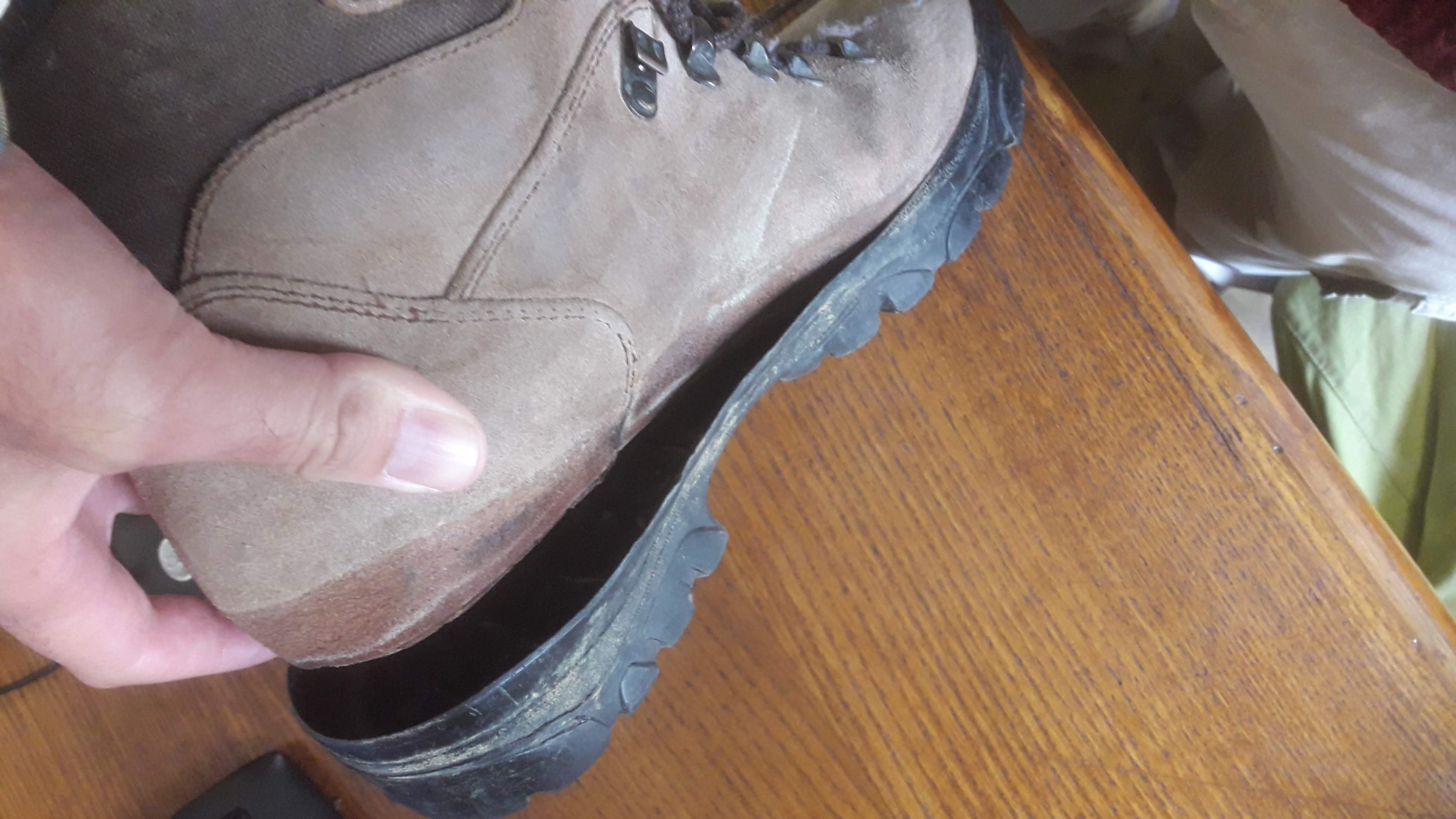
enter image description here

Update

Just an update about how it ended.

After a couple of years, I decided to take the boot to a local cobbler. He warned me that the glue was expired and the other boot was likely to fail the same way.

I had one boot glued and the first test walk proved the cobbler right: the other boot sole unglued itself after a few kilometres.

In the few months after having the other boot glued I've done some walks (I guess total over 100 km) and the soles are still fine.

It was a bit more expensive than I expected (about 12 euros each boot) but that may be about 20% of the cost of an equivalent pair, and I expect more than 20% of the lifetime of the boots to still remain, so the repair will be profitable. Furthermore, I like to have gotten my old boots back.

In summary, until now, gluing back at a cobbler seems reliable (I'll update again if the boots fail again), and the cost is way less than the cost of a pair of boots but it's not negligible, so it may not be worth repairing if other parts of the boots are also nearing the end of its service life.

Pere
  • 311
  • 1
  • 2
  • 7

11 Answers11

26

Where I live, we just take such shoes to a Cobbler and he stitches the sole with the shoe all the way around within 30 minutes for negligible amount of money.

And the shoes get a new life. Your boots are good candidates for that treatment and will give you a few more years after that.

The cobbler is more suited to tell you whether that treatment will help your shoe or not and may well offer a hybrid solution better than a try at home.

Here is a random video of someone doing exactly what this answer suggests (I have no association with this video, i just searched for the concept on YouTube).

Hanky Panky
  • 429
  • 3
  • 7
24

My experience with gluing boots and shoes is that it never does the job for long. Whilst this may to some extent be down to the glue I've used, I think it is also due to the surfaces having been glued in the past.

The surfaces will have the old glue that has failed still present. This means you'll have to thoroughly remove the old glue. If you don't, then any fresh glue applied will be on top of the old glue, which means it will soon fail as the old glue further gives up.

If you do decide to glue these boots, be prepared for them to fail again, especially if you've not completely removed the old glue, so take care. Long hikes may not be a good idea.

Toby Speight
  • 4,926
  • 23
  • 44
Matthew Martin
  • 401
  • 3
  • 6
19

They were glued when they were originally made, there's no particular reason they shouldn't be reglued now. It's better than having no shoes or the heel flapping about as you walk.

Though the glue that was used the first time obviously has a limited lifespan, perhaps look for a better one.

Whether it's reliable or not is really down to the quality of the job done, surface preparation, type of glue, proper pressure on bonding surfaces etc etc. but there's no real reason that doing a proper job shouldn't be as reliable as original construction.

Separatrix
  • 8,097
  • 21
  • 38
13

I've had nice boots glued properly - the local shoe-mender took a look and said "this needs three-day glue, come back on Friday" Wasn't particularly expensive either.

Those boots lasted years more, so it was definitely worth doing. I don't think that any glue you can buy in a hardware store will do the job well-enough though.

I also should add that the boots stank on pickup, but that did fade off after a week or two.

Also they never quite took Nugget/polish around the bottom the same again. I suspect the glue somehow chemically altered the leather nearest the joint, or there may have been some wiped off. Didn't bother me because they weren't dress boots.

I'd give a photo, but this was a long time ago and they're gone now.

Criggie
  • 1,190
  • 6
  • 13
10

My Merrell boots came apart like yours after a few years. I glued the soles back on with Gorilla Glue (original version, amber polyurethane) and they're still holding strong after several more years. If you use this glue, be sure to follow the directions and moisten one of the surfaces with water before gluing.

MTA
  • 851
  • 5
  • 6
6

You can get a fair job yourself with "Shoe Goo" , a product in the US that sells for less than $ 5 /tube ( enough for several shoes). I used it on a pair of sport shoes about 2 months ago and they are still good. Once I used a laboratory grade of urethane ( not available to the public) ; it was better than the original rubber(?) and I made two heels with it , lasted 2 years + with little or no wear ( threw the shoes away when the soles wore out).

blacksmith37
  • 1,152
  • 8
  • 9
4

This is very common with expensive hiking boots, which use a soft, but less stable type of rubber. The process is called hydrolysis and is due to the ageing of this soft rubber. The rubber loses strength itself and becomes crumbly; it is not a glue issue.

In my experience, glue does not work.

I had a very high quality boot with the Vibram soles in near pristine condition. Soles fell off. Took the shoes to a cobbler, who glued on the soles using rubber cement.

The shoes looked like new, but completely fell apart on my next trip.

I took them back to the cobbler, who specifically ordered the glue recommended by the manufacturer of the shoes. (It was either a neoprene or polyurethane glue, I don't remember).

Again, the repair looked perfect, and again the shoes fell apart on a trip.

This is very dangerous, because the process starts in the middle of the shoe, until the sole is only held at the edges. Suddenly, the whole sole will come off in one piece.

I fixed the shoe with Gorilla glue, which worked long enough to get back home.

The manufacturer claimed that they could replace all of the aged rubber (cost ~$100), it looks good, but I haven't tried it yet. They did not simply glue on a new sole, but they ripped off all of the rubber parts down to the leather and replaced those.

Things that I learned:

  • Glues do not work, even when done professionally. In my case, the sole looked like new. There was no glue residue left on the underside of the shoe. The surface of the shoe looked perfectly clean, and I thought it would be simple to just glue the sole back on.
  • This is a major safety issue. Imagine your shoes suddenly falling apart in the middle of nowhere. In the best case, it will be a long drive to buy a new pair of shoes, ruining the vacation.
  • Of all emergency glues, Gorilla glue worked best.
  • Gluing the sole on on the trail is not easy. It needs a lot of pressure to keep the sole in contact with the rest of the shoe. The glue needs to harden for at least a day.
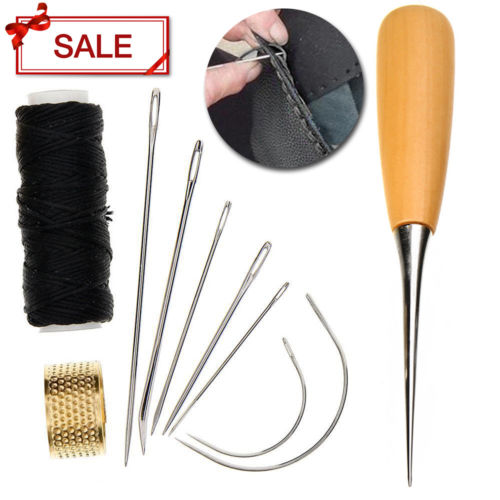
  • It is a good idea to have an awl and some dental floss to sew the sole to the shoe before gluing. Especially the rounded needles came in very handy. (search on ebay for "canvas repair stitcher").Awl
Toby Speight
  • 4,926
  • 23
  • 44
guest
  • 121
  • 1
  • 2
1

I would go buy an outdoor construction adhesive (one that is designed for all materials, lest it eat your soles up from the top). Skip the super glues. Not only will you have enough glue, but it should hold relatively well.

Machavity
  • 482
  • 3
  • 10
1

I have had this issue with running shoes in the past. I had one pair in particular that I loved, but was discontinued. I tried a few different things, and found Barge Cement to be the best product for gluing the sole back on. You can get another 200 miles or so until they need to be glued again. While it works, it is a pretty strong and flexible bond. But as other have said they are likely to fail again in the same spot, and it usually happens suddenly.

James
  • 111
  • 2
0

I glued a layer of the sole of my Danner boots' to a second layer, using 100% silicone . It worked great. But neither layer was leather.

ElHombre55
  • 209
  • 1
  • 3
0

I highly recommend checking out BSI products(Bob Smith Industries), super glue cyanocrylate (CA) class glues. I have given up on the cost and failures of cobblers and have had good success with their Insta-Cure product for repair on the soles of hiking boots so for years. I have just found out about their IC-2000 rubber toughened flexible product and will be trying it out. My most recent repair was on my Wetland Muck boots. Both entire soles failed at a year of use; such shameful diminishing of quality in manufacturing. The Insta-Cure was used for this application. Store all CA products in the fridge to greatly prolong useful life.

bob1
  • 12,494
  • 1
  • 28
  • 53