I'm just getting into climbing, and I have to say I still find it hard to trust the equipment, bolts etc sometimes (even though I know accidents with that are really rare.). Anyway, I try to understand as much of what is going on, to be able to better judge situations, and wether I feel comfortable about them.
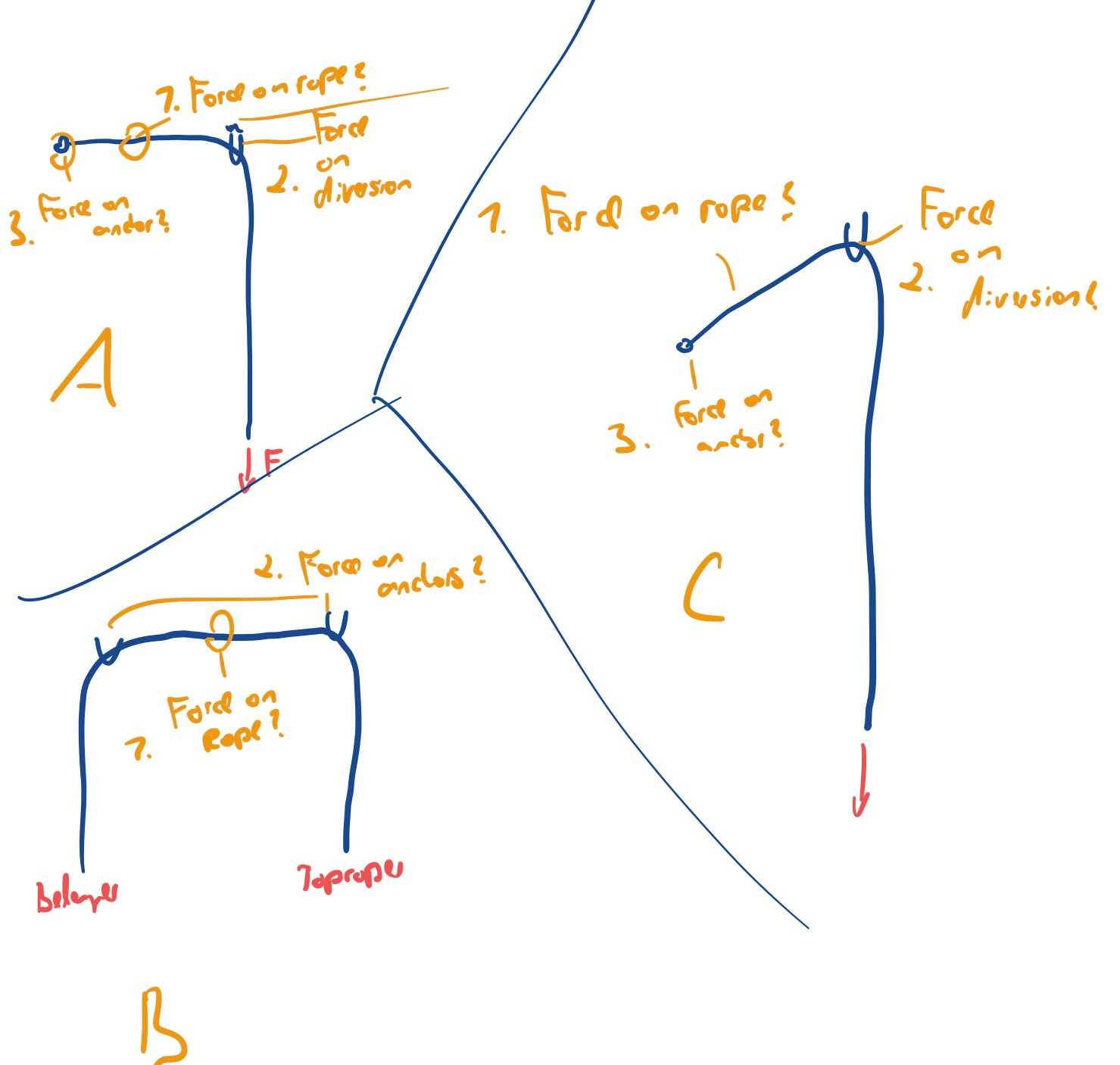
So I went climbing with a friend of mine the other day. And To be able to toprope two different routes that where next to each other he set the diversion up like in the scenario B I sketched in the attached image.
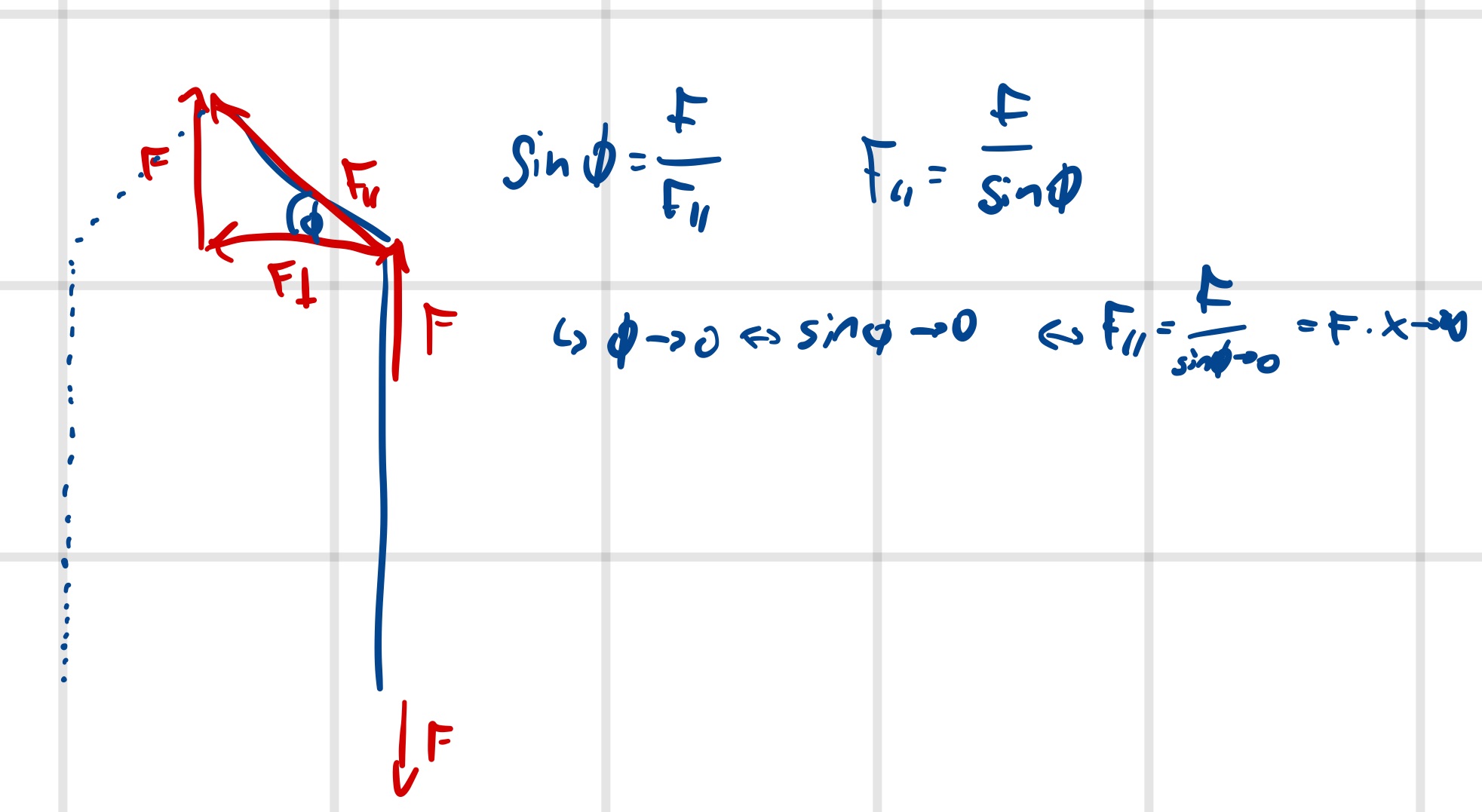
Now, I somehow feel like that will put hella stress on the rope, and possible on the anchors, because the rope is running (almost) horizontally for a few meters. I'm not sure if that's right, though.
Is it a similar scenario force-wise as in the 3rd pictures on Ben's answer on this post: Why should the angle in a rope attached to two anchors be 60 degrees or less? ?
Can anyone tell me what the forces are on the rope and the anchors in the 3 different scenarios I sketched?
Thanks! Diclofenac