With a little time on my hands I tried an experiment. It was just about successful. I used the windshield/pot stand from my alcohol stove, and oak twigs, of which I have many fallen from the trees over my garden. It eventually boiled a cup of water, but having got off to a good start became really rather slow.
The airflow wasn't enough in still air, not helped by sitting on a flat concrete surface so little air could reach the central hole. Standing it on coarse gravel or a few stones would be a big help, and I'll probably add a few more holes. A grate made of wire mesh would help with airflow and lift the fire closer to the cup.
Blowing gently into the opening was needed to maintain flames that carried the heat to the cup as the glowing burn was rather too low. It also needed a lot of twigs (but they were mostly <6mm in diameter, and frequent feeding, often from the top to keep any kind of structure to the fire.
With thin fallen twigs it lit easily, using paper and a few drops of the meths I'd use for most of my cooking.
All in all, it's a good plan B already, and could be improved further even without the complexity of a double-wall design, though that would clearly be more efficient.
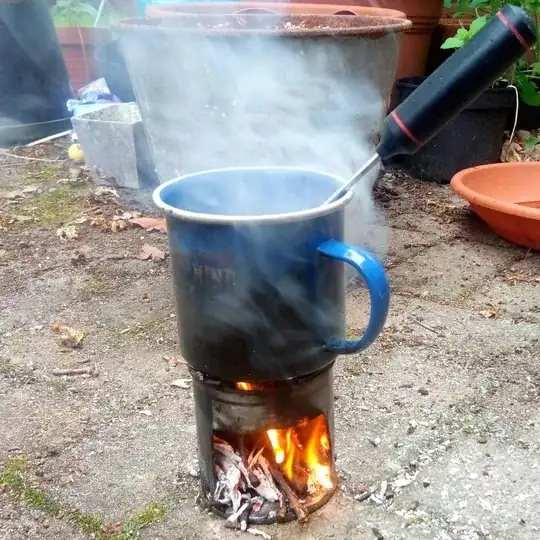
I added a grate made of wire gauze (cut from a sieve) and tested it in the field on a recent bike tour, using pine twigs. The ground was still very flat, stopping airflow from the large base hole, but burning was better with the base of the fire above the side holes. It's hard to compare directly with the different wood as well, but it did seem more successful and to need less blowing and top-feeding. It's still only a plan B compared to meths, which itself was improved considerably for building a little drystone wall most of the way round reaching about half way up the cup (rounded stones meant plenty of gaps for air). That was at a different spot so I couldn't test wood+wall.


