9

I heard what sounded like an old wives' tale some time ago: If you are driving along a stretch of road with a moose warning, using headlights on long/high beam even during daylight will warn moose off the road.
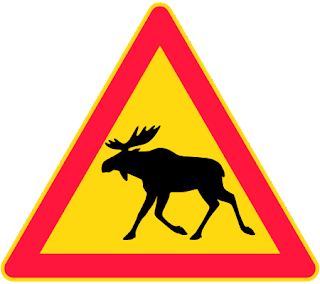
Road hazard sign with a moose silhouette

Seeing as a collision with a moose can be fatal to both parties, I'd like to take any precaution that I can. Incidentally, an answer to the linked question relates a tale of a moose reacting to a camera flash during daylight.

So, does this particular precaution actually work?

bob1
  • 12,494
  • 1
  • 28
  • 53
Haem
  • 537
  • 3
  • 12

1 Answers1

5

I can't really have an opinion about daylight, as moose are more active around dusk/ dawn and night. In most cases, moose would stand more chance if it reacts rather than you react to it. However, I think most generic suggestions/advices can be summarized as below:

  1. Take the warning signs seriously, they have been placed there for a reason - Be alert, drive slow, this will improve reaction time
  2. Prefer to use high beam on straight section when you have decent line of sight
  3. If you spot a moose nearby road, do not use high beam, use dipper -- That allows the animal to react and not be entirely blinded by the high beam
  4. If at all you spot a moose on the road, do not break immediately, slow down gradually
  5. If at all you spot a moose on the road, I know the first reaction would be to steer clear, but do not swerve to avoid hitting the animal

Also, this post on Travel.SE is worth reading: Should I turn down the high beam in "deer areas"?

WedaPashi
  • 31,857
  • 22
  • 114
  • 276