20

In a book that takes place in northern Sweden in the mid-19th century, the protagonists use something called myrskidor (literally "mire skis") to enter or cross mires / bogs. The principle seems to make sense: like with skis or snowshoes on snow, distributing the weight makes one sink less. Although the book is a work of fiction, this detail appears realistic, as both Wikipedia and museums refer to such skis. Yet it seems that such bog skis today no longer exist. I've never seen any either in the wild or for sale in outdoor stores. Wikipedia has only a brief article and only in Swedish written entirely in the past tense, and a web search in English yields some references from Wisconsin or New York State (USA), including a result claiming they are uniquely Wisconsin (this would seem to be inaccurate considering the Swedish tradition; perhaps Swedish immigrants brought them, although the modern Wisconsin ones are much longer than the old Swedish ones).
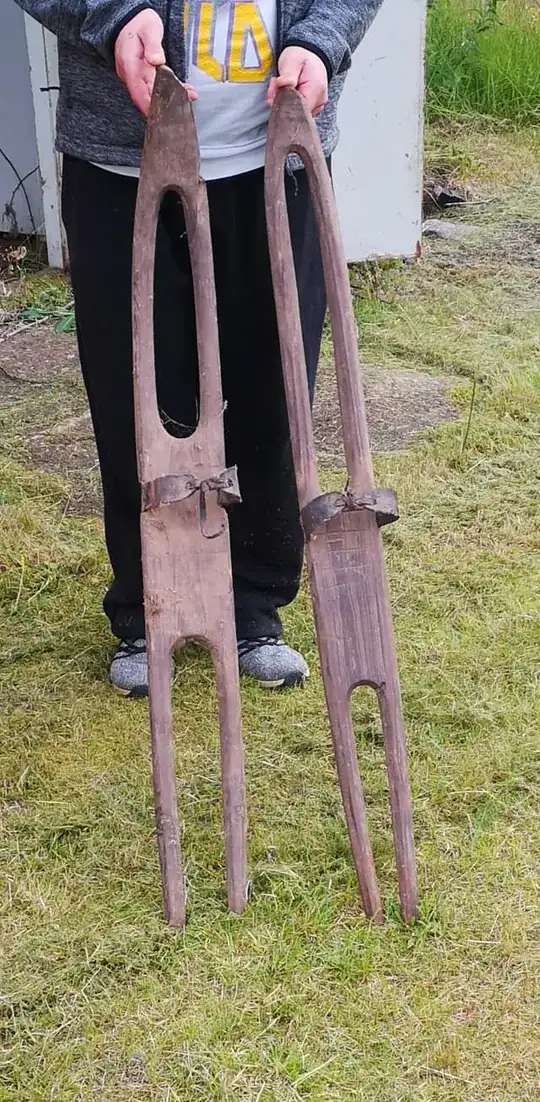
Mire skis
Bog skis. Source: Carina Larsson-Johansson, CC-BY-SA, via Wikimedia Commons.

Why did bog skis fall out of use? Are they too hard to use? Too niche? Do we have better methods of crossing bogs? Or we simply don't go there anymore? The protagonist in the book mentions that if he falls he is done for and will never be able to get up again, but I don't know how literally he meant that.

gerrit
  • 27,640
  • 13
  • 95
  • 207

1 Answers1

22

I can't answer all the questions and this is entirely from reading translations of pages:

The wiki on the skis says that they were mainly used during summer hay harvest (using scythes, not machines) in bogs. A bit of cross-reading on some of the linked articles (e.g. Slatter) from the wiki page indicates that in the resource poor parts of the country, every source of hay was harvested, or sometimes that there were particular types of harvest (e.g. Horsetails/Equisetum; Swedish page here) that people were after for a particular purpose.

These demands meant that people developed the skis to take advantage of these resources and harvest particular items that they wanted/needed. I suspect that they are no longer needed rather than not used, as people don't manually harvest these sorts of items any more and farming techniques mean better yields from crops/fodder.

The above seems to be confirmed by the Museum Malax in Finland, in an article on their site, which translated says:

Hay production from cattails and horse chestnut in bogs, marshes and coastal meadows was often necessary in the past, so that people would have enough fodder for their livestock during the winter. Hay from the home's immediate surroundings - meadows and mowing fields - was not always enough.

Toby Speight
  • 4,926
  • 23
  • 44
bob1
  • 12,494
  • 1
  • 28
  • 53