There are two factors in trail running in mud:
Grip. For this you need deep lugs (opposite to @Mike's answer). To some extent, the deeper the better, though there will be a point where they are too deep and don't allow stability in the shoe.
Mud shedding ability. For this I agree with @Mike, widely spaced is the way to go.
I've taken the following images from several well known brands of trail running shoes. It is not an endorsement for any of them, just images from their websites. If you look closely, you will see the similarities in all of them:
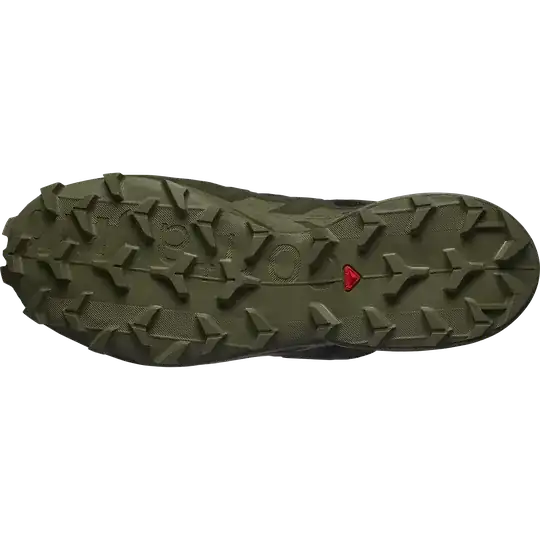
Salomon Speedcross 6
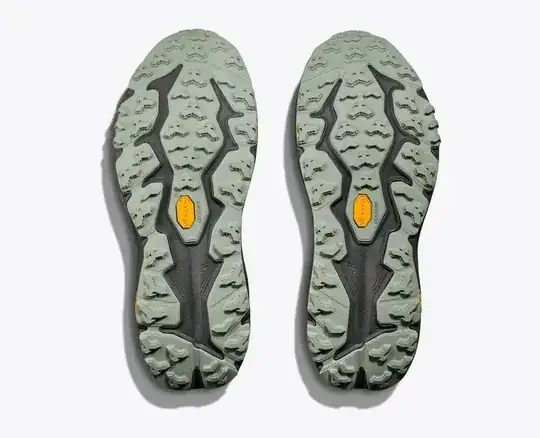
Hoka Speedgoat 6
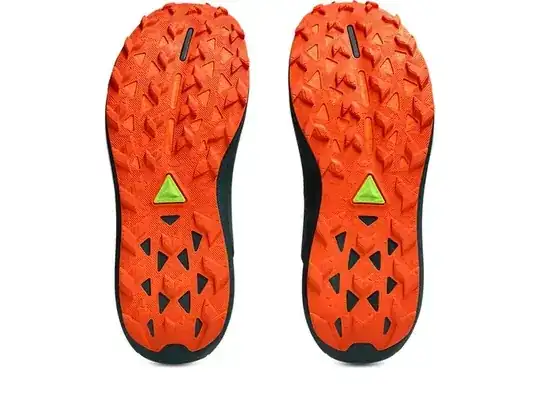
Asics Gel Trabuco 13
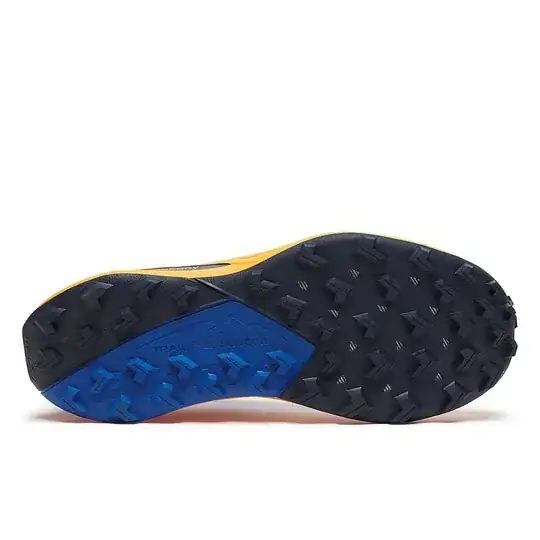
Saucony Peregrine 15
First, all of them have more or less triangular shapes pointed forwards and backwards. This is the grip component. The points of the triangles dig in, forcing the dirt/mud sideways along the sloping sides, giving resistance against the dirt/mud and thereby providing grip.
Second you should notice that there aren't that many lugs spread over the sole. Compare them to the image below from a Lowa Ranger III hiking boot:
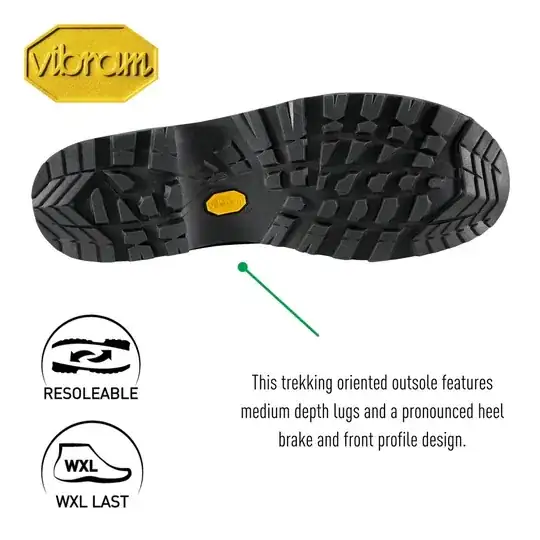
The hiking boot has a lot more lugs and they are less aggressive in shape. This is because hiking is much more deliberate in action than running; the action of putting your foot down is slower and you are normally at less extension than when running, so the less aggressive lugs provide adequate grip and stability while walking.
For running, where you need maximum grip at the impact and take-off parts of the stride, the lugs are more widely spaced and fewer, but more aggressive in shape compared to a walking boot, so as to provide the maximum of grip.
I can't easily find data on the lugs for all the shoes, but Outdoor Gear Lab (I'm not affiliated with Outdoor Gear Lab, but they generally have good information and detail on their pages) does have some information on their review pages. It seems that the lug depth varies between about 2.5 mm (0.098") to about 5.5 mm (0.216"), with deeper lugs being better for deeper mud.
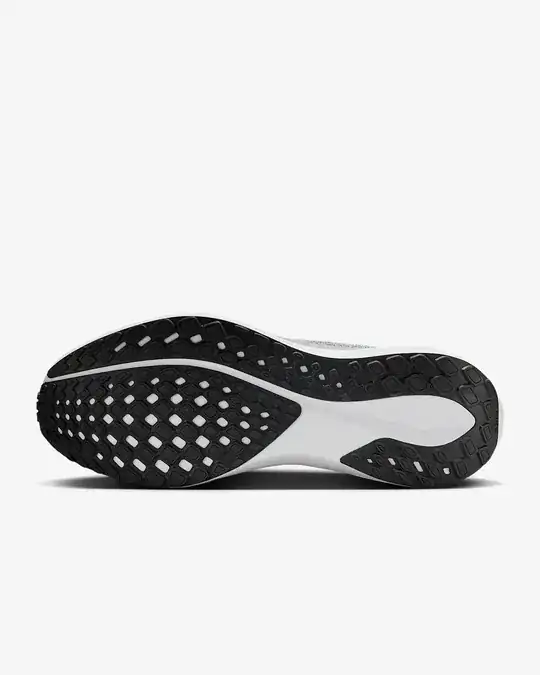
To answer the question "Does mud stick less to trail shoes?". If, in addition, you compare the trail shoes to road running shoes, such as these Nike Pegasus 41 shoes (taken from Nike website, again, no endorsement or affiliation implied):
or these New Balance Fresh Foam 680 V8:
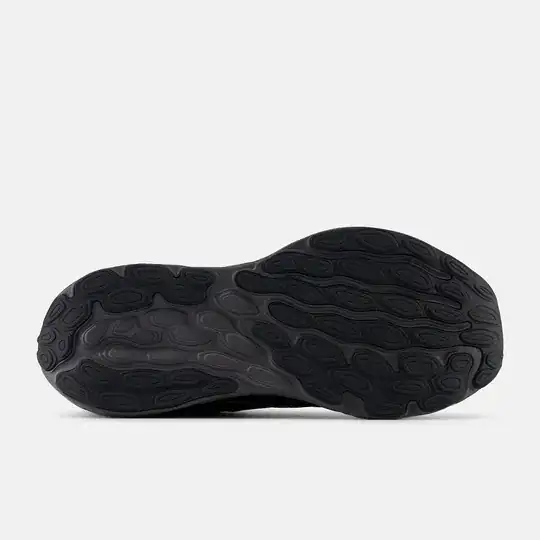
You can see a lot more lugs, they are more closely spaced, have less aggressive pattern and are much shorter (though this isn't obvious in the picture). This means, that on mud they have a much more area for the mud to stick to and also have crevices that will hold mud (especially sticky mud) and less shedding ability. So, long story short, road shoes will hold more mud than trail shoes.
Having said that, there are some types of mud, particularly clay-based ones that are super sticky, and no matter the shoes or the tread, you will end up with the shoes looking like you are trying to take half the trail with you.


