In short, no, there's no Japanese region known for spicy food in the same way that (say) Sichuan or Thailand is. Japanese doesn't really even have a word for "spicy", 辛い karai originally meant "salty" and is still used in that sense as well. However, there are a couple of spicy local specialities, mostly in the south of the country where they had the most Chinese/Korean influence.
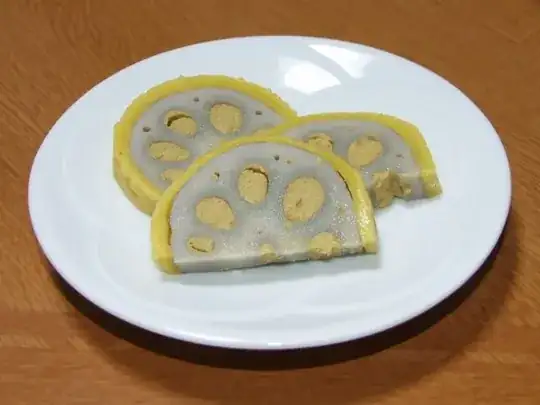 (courtesy Babi Hijau, Wikimedia Commons)
- Karashi renkon (辛子蓮根) means "spicy lotus root", and it consists basically of lotus root stuffed with mustard -- and in case you haven't tried Japanese mustard yet, it's usually blow-your-socks-off hot. This is a speciality of Kumamoto prefecture in Kyushu.
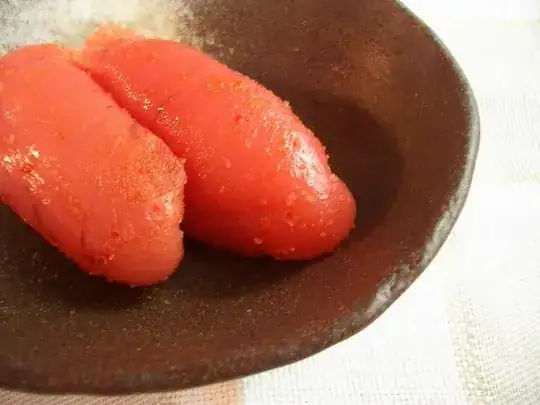 (courtesy Kanko, Flickr)
- Karashi mentaiko (辛子明太子) is spicy cod roe, this time with actual chilli. It's a Korean import that first landed in Japan at Shimonoseki at the western tip of Honshu, but is now well known all around northern Kyushu (esp. Fukuoka) as well. It's a rather expensive delicacy, and mentaiko spaghetti is a very popular (but only mildly spicy) way to eat it, but connoisseurs eat it raw with rice.
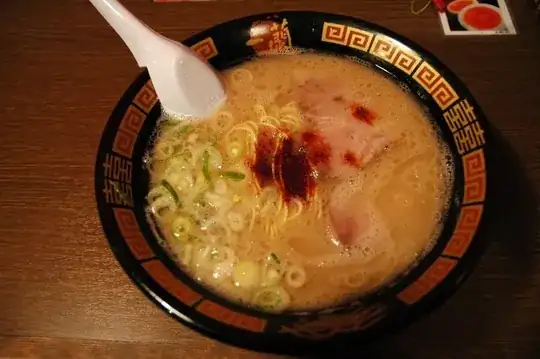 (courtesy me)
- Speaking of Kyushu, while classical tonkotsu ramen (豚骨ラーメン, noodles in pork bone broth) is not spicy, it's very common to add chili to it these days. Fukuoka is also the home of tonkotsu, with Ichiran (一蘭) and Ippudo (一風堂) battling it out for supremacy -- Ippudo's akamaru, in particular, is both famous and spicy. That said, I personally prefer Ichiran for their purity of vision: diners eat in curtained-off single booths! And you can specify the size of your chili dab, the default is above.
And that's about it, really, for main dishes or even main ingredients. In addition to wasabi and shichimi, Japanese cuisine uses some "spicy" spices:
- The karashi mustard of karashi-renkon is also used to spice up some otherwise bland dishes like oden stew.
- Yuzu-koshō is a paste of yuzu (a citrus fruit) peel with green chillies, most commonly eaten with nabe hotpot stews and yakitori grilled chicken. Originally from Yufuin in Kyushu, but was briefly super-popular nationwide a few years back.
- Sanshō (a mild relative of Sichuan pepper) is used in a few dishes like grilled eel (unagi).
There's also a whole slew of spicy nibbles designed to accompany alcohol, eg. takowasabi (minced octopus with wasabi) and shiokara (fermented squid guts, absolutely horrible stuff), but none of these are particularly regional as far as I'm aware.
Last but not least, don't forget more recent culinary imports:
- Japan's larger cities usually have Korean enclaves (eg. Tsuruhashi in Osaka and Okubo in Tokyo) which will give you all the chilli you can handle and then some, and many Korean foods like yakiniku BBQ have become an essential part of Japanese cuisine.
- Curry rice is apparently the single most common dish prepared in Japanese homes, although this came to Japan via England and even the notionally "spicy" (辛口 karakuchi) varieties will barely register on the palate of a chilli fiend.
- Last and probably least, Japanese-style Chinese (中華料理 chūka ryōri) is ubiquitous, even the smallest town will have one or two restaurants serving it. Unfortunately most all spiciness has usually been blanched out, with originally murderously hot Sichuan dishes like mapo doufu turned into vaguely ketchup-y concoctions, but there are usually a few token nominally spicy dishes like ebi chiri (エビチリ), shrimp in chilli sauce, on the menu.


