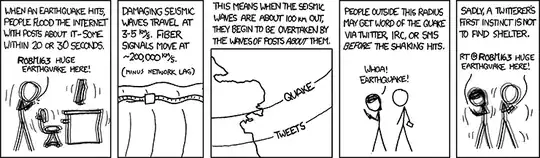
Earthquakes are notoriously hard to predict, for the US they are working on this an early warning system which predicted the recent earthquake. Giving about ten seconds warning. Which I think may be less than you were looking for ...
In general if you're in an earthquake zone there's always a (remote) chance of a sudden quake. There are minor earthquakes all the time, a sequence of minor earthquakes does not make the 'big one' more likely. Arguably, smaller quakes relieve pressure and could make big quakes less common, but they could also move things in such a way that it does cause a bigger quake. People have been studying this for years and the best we've got is ten seconds warning ...
There are a few things you can do -- first find out if you're in an earthquake zone, check the local government for wherever you are or here's a nice map of them. Second, know what to do in the case of an earthquake. Finally know that earthquakes are pretty scary and can be dangerous depending what you're doing (i.e. driving over a bridge) but places that are in earthquake zones are designed to handle even relatively big quakes. Quakes on the scale of the Japanese one a few years ago are incredibly rare and honestly not really worth worrying about (if it happens, it happens).
You can track recent earthquakes on various sites and, yes, there are apps for that -- here's the Red Cross one.
One thing you can watch for is earthquake caused tsunamis, (or any tsunamis). These are (mostly) predictable, often more dangerous than the earthquake, and getting a warning will give you time to take action. Here's the UNESCO page and there are apps for that as well but I've no experience of them so I don't want to recommend one at random.
There is a page at cwarn.org that looks like it covers a lot of the above.
I will say once again, earthquakes and other geological events are very hard to predict. Warnings often err on the side of caution, while some events still take everyone completely by surprise. It's one of those things you should know how to handle if it happens, and then try and not worry about it to much. I say this as someone that lives less than half a kilometer away from a major fault-line.
Quick Edit: The question was changed after I answered to be California specific, I'm not going to trim the answer just to that since I think it's generic enough to be applicable. The links I gave are still useful but for specific stuff consider the ca.gov earthquake pages and the Southern California Earthquake Center (SCEC)
.
Edit 2 (three months later): I just wanted to edit this to add a link to a upcoming tool called QuakeAlert. It looks to have grown out of ShakeAlert which is linked in the other answer and offers personal and industrial early earthquake warning solutions (it's not clear from the site how much warning they can give).