Hotel pricing in Japan is generally highly seasonal, and many hotels go so far as to publish a "room rate calendar" (客室料金カレンダー) that shows exactly how prices vary through the year. Disney has a nice, clear text-based one, but I'll use this rather more typical image from the Resonate chain in Kyushu to illustrate:
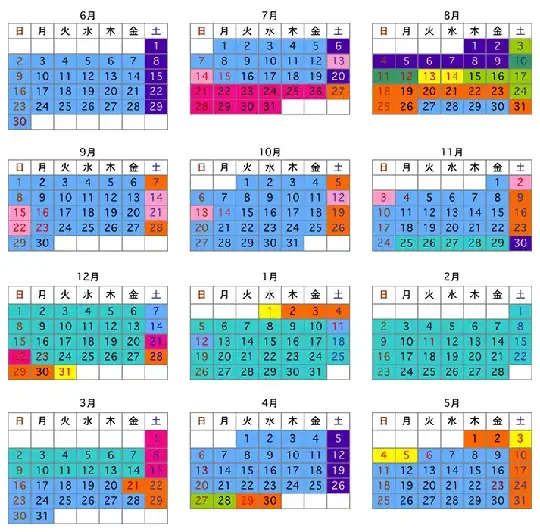
To parse that, 月 means month (6月 = June, 7月 = July, etc), and prices are ranked by color so that yellow (priciest) > green > light pink > orange > dark blue > dark pink > light blue > cyan (cheapest); and no, that order doesn't make a whole lot of sense. (Adding in letter codes, eg. A to E, is pretty common too.) A few trends are clear:
- August is the most expensive month, particularly around Obon (the yellow days), with late July not far behind. This is summer holiday season, when families are traveling.
- The week around New Year's Day (late Dec/early Jan) and Golden Week (late April/early May) are also very pricy.
- Saturdays (土) always cost more, often Fridays as well (although not for this particular chain).
- Winter weekdays are cheapest.
This is, I'd posit, the "standard" pricing pattern for hotels and ryokan in tourist-heavy destinations. Business hotels often reverse this to some extent, with cheaper weekend deals. There can be significant deviations from the norm though:
- Western-style dynamic pricing is becoming more and more common, especially for identikit city center business hotels that can really only compete on price. Tourist hotels tend to go more for "packages" including dinner and drinks and hot spring passes and whatnot. For both, Rakuten Travel is the only English-language website I know of where you can reliably find these deals, its main (Japanese-only) competitor being Jalan.net.
- Places famous for cherry blossoms (eg. Kyoto and surroundings) get an extra high season in late March or so.
- Ski resorts obviously have their high season in winter (but for these, too, New Year is super-peak).
- The very cheapest lodgings will have more or less flat pricing year-round, although love hotels etc will usually jack up Fri/Sat prices, and the cheapest rooms tend to sell out first at times of high demand.


