14

I was doing a sport climb recently where there was a pretty good distance between bolts, resulting in long rope runouts. Falling before the next bolt could easily cause a person to deck on a ledge. Luckily, no one fell at this point, but it was very precarious.

My question is: What are some techniques, as a belayer or climber, can you do to minimize risk of injury in a fall during long runouts? For example, if the belayer sees the climber falling, should they run back to take up slack quickly? I've also heard of the belayer standing on high ground so they could drop at the same time as the climber to take up slack.

Assume this is a sport (not mixed) route and no additional protection can be placed.

shimizu
  • 3,653
  • 1
  • 25
  • 37

2 Answers2

5

Your options are limited and I think you've mentioned most of the only possibilities.

Depending on where the belay is and presuming it's at ground level you could get your belayer to run backwards as you fall or jump down off a small rock to take in the slack quickly (you've already mentioned these). This will likely slow you decent a little at best and only if your belayer can act fast which isn't guaranteed.

I wouldn't recommend paying out less slack, this is likely just going to make it harder to climb and potentially pull the climber off. You could minimise slack as best you can but your always going to need some slack. Being able to clip quickly and easily is going to be very important if the bolts are spaced.

Only other thing I can think of is bouldering pads. As many as you can get your hands on, but one is better than none. Put them under the route. This will protect you up to a certain height (10M prob at best) but not beyond.

If it's a serious climb, then it just is. That's how the person laying the route wanted it to be. You need to make a personal decision on the danger and simply accept it and mitigate it as best you can, though any mitigation will be severally limited.

2

The question is a bit old, so I believe this equipment got more common in the later years.

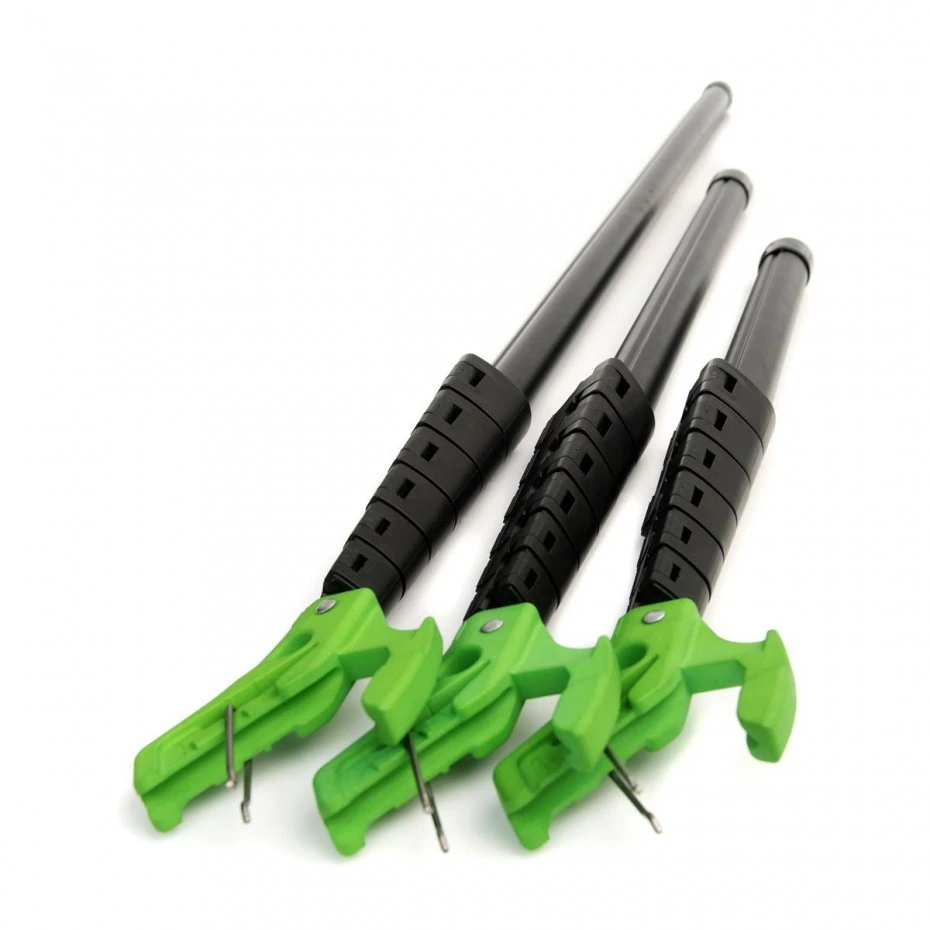
To keep yourself safe, you can use a stick clip, the most common model now being Beta Stick. They are typically used to clip the first bolt, but you can attach them to your harness, then find a safe position before the runout section (probably put yourself on safety at the last bolt) and clip the next bolt. They can reach up to 3.6 metres (add your own arms reach to this), and the ultra long model may extend up to 6.5 metres.

However, if you use a stick clip, your climb will be no longer lead, but a series of top rope pitches.

Beta Stick EVO

IMil
  • 254
  • 1
  • 6