There are two questions that I have already found on the site that attempt to answer certain parts of my question (Canadian citizen, on US no-fly list. What can I do in order to be allowed on flights which go through US airspace? and How do I find flights that avoid US airspace?). They do not fully address my concerns so I am hoping I can get more information here.
I am writing to gather information for a client. They are a Canadian citizen and are, unfortunately, on the US no-fly list. Their listing is related to something that happened almost 20 years ago when they were a teenager. They have since moved on and are living a law-abiding and productive life while meaningfully contributing to society through their profession. They were put on the Canadian no-fly list as well but successfully challenged that a few years ago demonstrating that the criteria do not apply to them today.
After being taken off the Canadian no-fly list, the client successfully applied for a Canadian passport. Of note is that a Canadian passport can be refused if the Minister has reasonable grounds to believe that the decision is necessary to prevent the commission of a terrorism offence, as defined in section 2 of the Criminal Code, or for the national security of Canada or a foreign country or state. Despite this criterion, the client received their passport subsequent to an expeditious secondary examination after submitting the application.
The client has travelled domestically in Canada (subsequent to being taken off the Canadian no-fly list). However, when attempting their first international flight, they were denied boarding and told that it had to do with US regulations. They chose a flight route to that they believed would avoid US airspace (Toronto to Reykjavik). However, their current research is concluding that all flights originating from Toronto (and probably Vancouver as well) will have to share their APIS information with the US, since they are so close to the border.
Can anyone confirm this or provide any additional information that may be helpful? The client is exploring the DHS TRIP application process to take their name off any US no-fly list. However, given the fact that they are not a US citizen, it will be of limited help since there is no confirmation provided to non-US citizens.
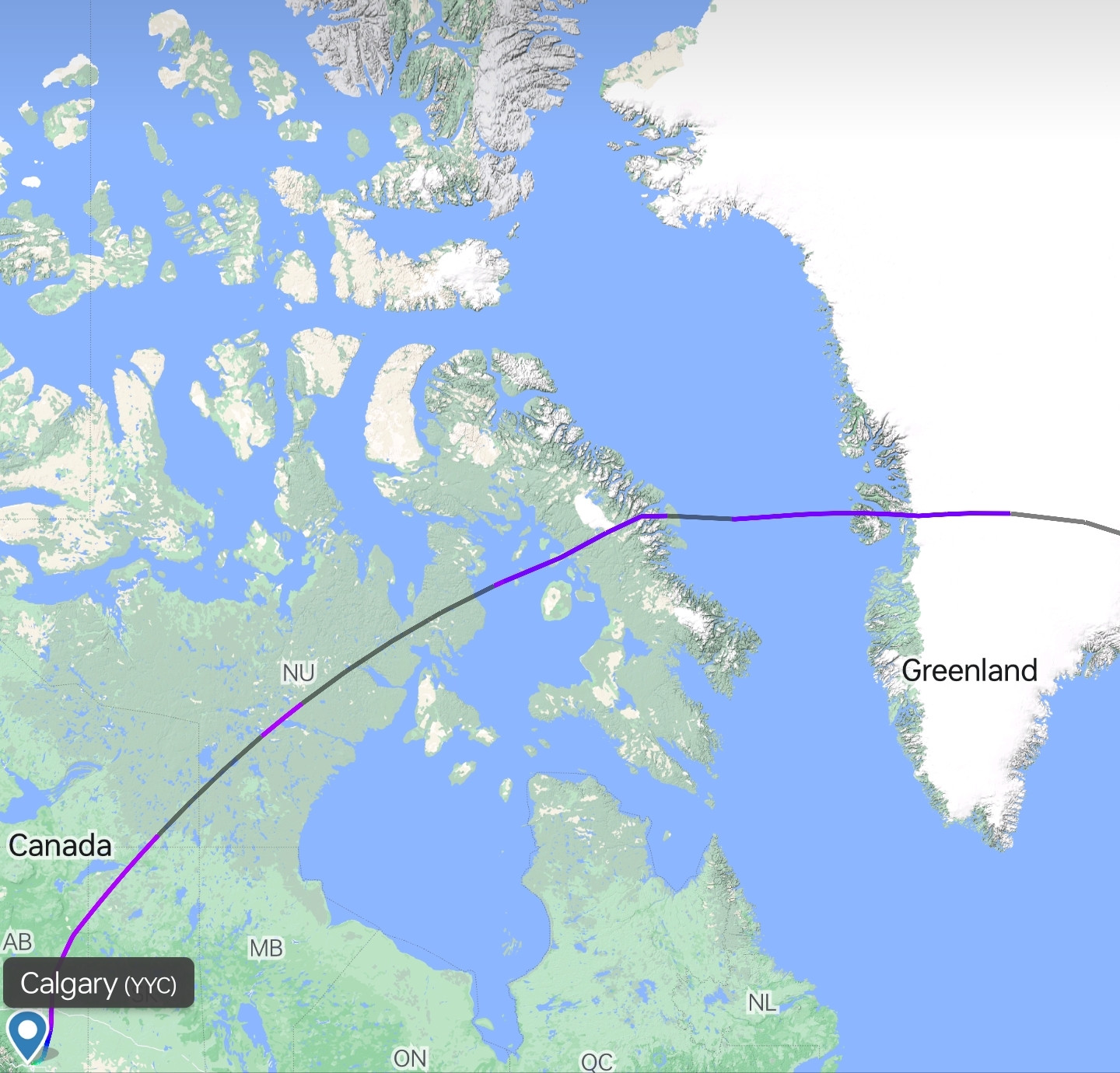
Is there a way to determine which flights will avoid US airspace, or more precisely, will not be required to provide the APIS information which may be preventing them from flying? The client is aware that flights out of Calgary and Halifax are an option. However, they are trying to determine if there are any flights that they might be able to currently take out of Toronto.
Additional information:
Thank you for everyone's responses. We have found some additional information that may be of assistance in figuring all of this out.
- "Continental United States"
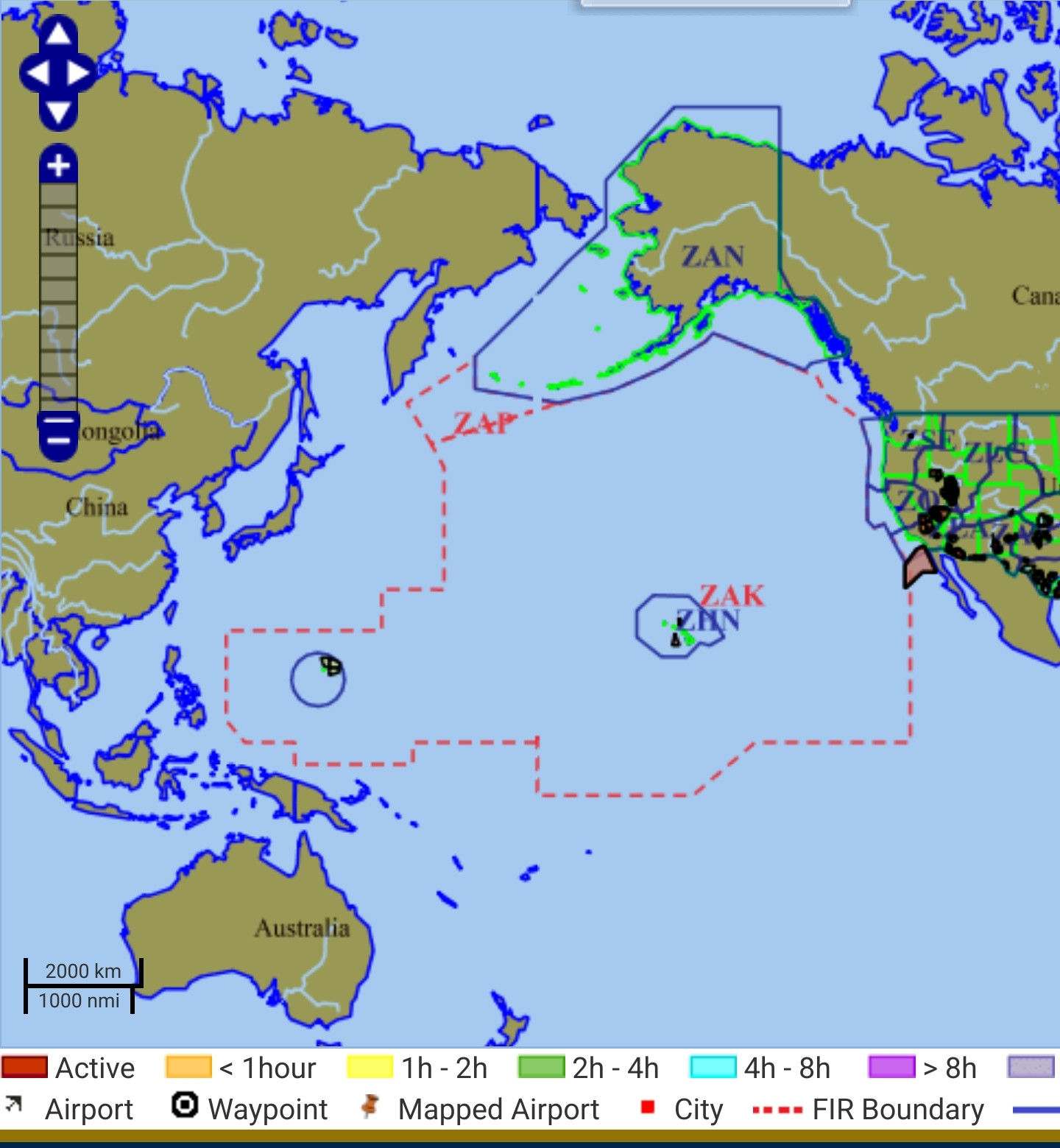
It seems that flights that go over Alaska or Hawaii are not part of the US Secure Flight Program. As such, in response to one of the answers below, the research shows that westerly flights from Calgary to Tokyo might be options. Flights out of Vancouver likely face the same issue as those out of Toronto or Montreal because it is so close to the border. The definition of "Continental United States" as not including Alaska or Hawaii is taken from the Privacy Impact Assessment Update on page 7:
Secure Flight collects and retains full name, date of birth, gender, redress number (if available), known traveler number (if implemented and available), and passport information (if available) for domestic flights and international flights arriving in, departing from, or overflying the continental United States (defined as the 48 lower contiguous states), as well as international flights operated by U.S. carriers.
Also in the Code of Federal Regulations:
Overflying the continental United States means departing from an airport or location outside the United States and transiting the airspace of the continental United States en route to another airport or location outside the United States. Airspace of the continental United States includes the airspace over the lower 48 states of the United States, not including Alaska or Hawaii, and the airspace overlying the territorial waters between the U.S. coast of the lower 48 states and 12 nautical miles from the continental U.S. coast. Overflying the continental United States does not apply to:
Flights that transit the airspace of the continental United States between two airports or locations in the same country, where that country is Canada or Mexico; or
Any other category of flights that the Assistant Secretary of Homeland Security (Transportation Security Administration) designates in a notice in the Federal Register.
"U.S. carriers"
It seems that the rules will also apply to flights anywhere in the world that are operated by U.S. air carriers. As such, the research seems to show that even if the client can avoid U.S. airspace flying out of Canada, they still may not be able to fly if they are on a U.S. carrier. Any such flight would require the sharing of APIS information. Does anyone have any information on whether foreign air carriers are shared as U.S. air carriers? Can the refusal to board from Toronto to Reykjavik be explained because the Icelandic Air carrier is considered a U.S. air carrier, or was that more likely because of the proximity of the Toronto Airport to the U.S. border?
Flight information
Some of the flights suggested cannot be found on regular travel booking websites. For example, a flight was suggested from St. John's to Madrid. Although the flights appear on FlightRadar24 here, it does not seem they can be found on the Air Canada booking system. Does anyone know why this is the case?